
Quick answer: Every other thing in your marketing exists to make a parent want to visit your school. The booking page is the only thing that decides whether they actually do. Most schools answer that moment with "contact the school office to arrange a visit" — which reaches a parent at nine at night, on a phone, and tells them to come back on Monday.
A booking system shows real dates, takes the booking without anybody in the building, confirms it instantly, reminds them the day before and tells you where they came from.
The one moment the parent raises their hand
Your posters, your Facebook campaign, your radio ad, your open event, your website, your film — all of it is doing one job. Getting a parent to the point where they think: I'd like to have a look round that school.
That thought has a short life. It happens in the evening, usually on a phone, usually while doing something else, and it competes with everything else in that parent's head.
What happens in the next thirty seconds decides whether you ever meet them.
What most schools have
Go and look at your own admissions page now. If it says any of these, this post is about you:
"To arrange a visit, please contact the school office." "Tours are available by appointment. Please telephone the school." "Please email admin@ to book a place."
Follow what that actually asks a parent to do. Compose an email to a school they've never been to. Choose their words carefully, because it feels a bit like applying for something. Send it. Wait. Hope somebody answers. Get a reply on Tuesday afternoon proposing a Thursday morning they can't do. Reply again. Wait again.
Six or seven steps, at least two days, and three of them need a specific human being to be at their desk.
Now the version that works: open the page, see Thursday 14th at 9.30 and Wednesday 20th at 2pm, tap one, put in a name and an email, done. Three steps, ten seconds, nobody involved.
Same parent, same school, same interest. Completely different outcome.
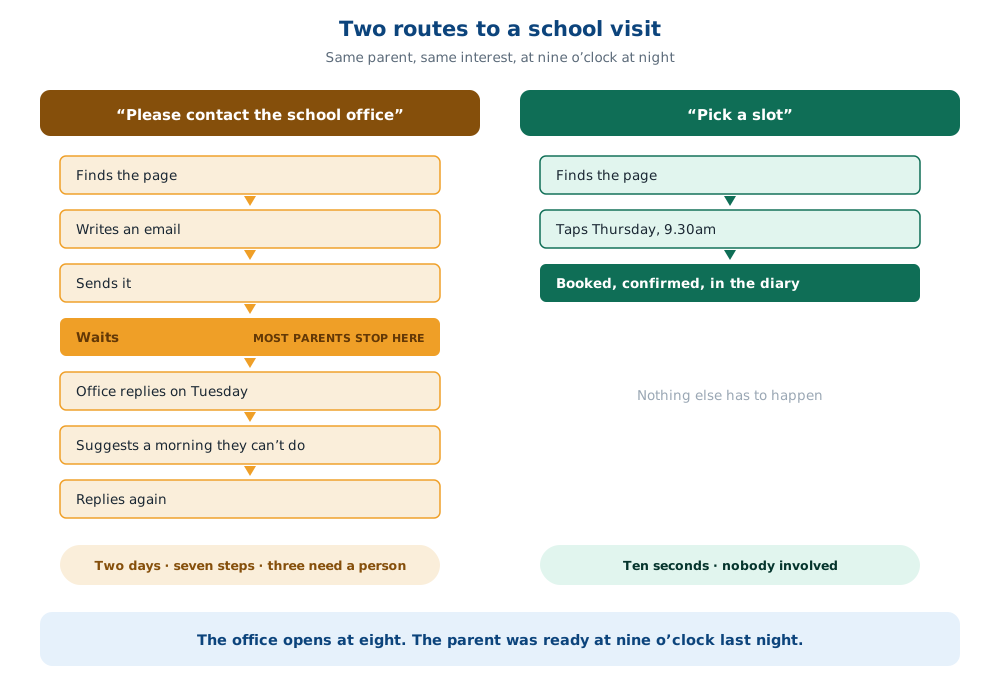
Nine at night, on a phone
This is the bit that catches schools out.
Parents don't research schools during the school day. They do it after the children are in bed. It's the same 9pm parent your website has to satisfy, and it's why "contact the office" fails — the office is shut for another eleven hours, and by then the moment has gone.
This isn't a criticism of school office staff, who are the busiest people in the building. It's an argument for a system that means they don't have to be involved at all until the morning.
What a booking system actually needs to do
It doesn't have to be expensive. Plenty of schools run this perfectly well on a simple form with published slots. What matters is that it does all of this:
Work properly on a phone. Most of your bookings will come from one. If the form is a PDF, or a table that needs pinching and zooming, you've lost.
Show real dates and real times. A page that says "contact us to arrange a mutually convenient time" is asking the parent to propose something, which is the highest-friction request you can make. Publish actual slots.
Take the booking without a human. No email, no phone call, no waiting.
Confirm it instantly. More on this below, because it's the most wasted opportunity in school admissions.
Send a reminder the day before. No-shows drop sharply, and it costs nothing.
Capture the right information — and no more than that.
Sit on every page of the site, not just the admissions page. You cannot predict which page a parent lands on. A parent searching your school's name might arrive on a class page, a newsletter or your term dates. Each of those pages should include a link to your tour booking page.
The seven fields, and no more
Every extra field costs you bookings. These earn their place:
Parent's name
Email address
Mobile number — for the reminder
Which September the child would start — tells you whether this is Reception or in-year
How many adults and how many children are coming — so you know what you're setting up for
How did you hear about us? — the single most useful line in your marketing year, and the only way you'll ever know whether the radio ad or the posters did anything
Is there anything we should know before you visit?
That said, there's a very good argument for only asking for the first three. It's well accepted in marketing circles that the more fields a form has, the less people will complete it. We found that this is not as true for tour bookings because parents are invested in coming on the school visit. But we do have some evidence that less is more when it comes to getting bookings completed. The trade-off is you get a bit less information.
The last question, if you include it, does more than it looks like it does. It's how a parent tells you their child uses a wheelchair, or has autism and would rather not arrive at the same time as everybody else, or that they don't speak much English and would like a bit of extra time. Most won't fill it in. The ones who do have just told you exactly how to make their visit go well — and the fact that you asked at all tells them something about the school.
If you run toddler sessions, add one more: have you been to one of our stay-and-play mornings?
Say what kind of visit it is
Your booking page has to answer three things before the parent commits:
What kind of visit is this? A tour with the head, or an open event with other families? They're different things and parents should be able to choose. If you offer both, say both, on the same page.
How long will it take? Parents are arranging childcare and work around this.
Are children welcome? Say it explicitly, either way. Parents tell us the three things that go wrong are being told they couldn't bring their child, being allowed to but feeling like a nuisance, and being allowed to but finding there was nothing for the child to do. All three are avoidable with one sentence on a booking page. There's much more on this in our full guide to running an open event.
If you cap your tours — and you should, six families is about right — say so. "Six places per tour" is an honest reason to book now rather than think about it.
The confirmation email nobody writes
The confirmation is the most-read email your school will ever send. Open rates are near enough total, because the parent is checking they actually booked the thing.
Most schools use it to say: Your booking is confirmed. Thursday 14th, 9.30am.
Here is what it could say:
Confirmed, date, time, and how long it'll last
Where to park, or the nearest station, and which entrance to come to
Who they'll meet — by name and role. "You'll be met by Mrs Hughes, our Headteacher."
Whether to bring children, in one clear sentence
A link to your film or 3D tour, so they arrive already knowing the building
The application deadline — 15 January, in writing, early
A phone number and a line saying it's fine to change the date
That email costs you nothing, gets read by everyone, and turns a diary entry into an appointment somebody is looking forward to.
After the visit — the bit almost nobody does
A parent walks round your school, likes it, goes home. Then nothing happens for six weeks.
The deciding doesn't happen on your premises. It happens later, at a kitchen table, usually in December, and you aren't in the room. What you can do is leave something in it.
Send an email the following day. Thank them for coming. Say what to do next, with the actual link to the local authority application. Our case study school even built a page that walked people through the local authority application. Give the deadline. Offer a second look if they'd like to bring their child, or a partner who couldn't make it.
Then send one more in early January, a week before applications close, because people who mean to do things in January frequently don't.
Two emails. Most schools send neither.
What it tells you that nothing else can
A booking system is the only place in a school's marketing where you get real numbers.
How many bookings this week, and this week last year. Which channel they came from. How many booked and then came. How many came and then applied. Whether the Facebook campaign produced bookings or just link clicks that go nowhere.
Two years of that data and you'll know exactly what your marketing is worth. Almost no school can currently say that about anything.
Being straight about the data
You're collecting names, contact details and information about children, so say plainly on the form what you'll use it for — arranging the visit and following it up about admissions — how long you'll keep it, and who to contact about it.
Don't quietly add them to the school newsletter. A parent who booked a tour has not agreed to be a subscriber, and it's the fastest way to turn interest into irritation.
What we'd do
We make the case to build this into every school website we make, because a website that can't take a booking is a brochure.
If your site is otherwise fine and it's only this that's missing, that's usually a short job rather than a rebuild — a proper booking page, slots you control, the confirmation and reminder emails written properly, and a booking route on every page of the site.
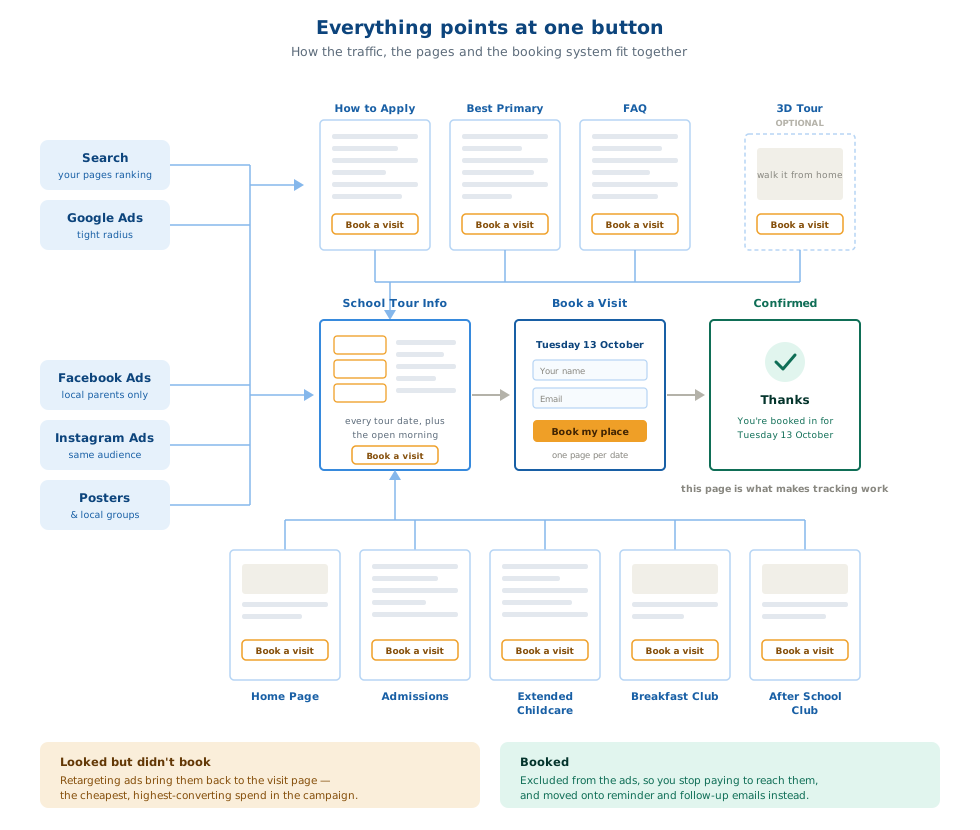
It's the cheapest thing in the Fill Your Class Funnel and it's the one that decides whether the rest of it was worth doing. There's no point spending a thousand pounds on advertising to send parents to a page that tells them to ring the office.
Talk to us about your website, or start with the Marketing Health Check if you want to know where the gaps are first.
Frequently asked questions
What is a school visit booking system?
A way for a parent to see your available tour or open event slots and book one online, without emailing or telephoning the school. It confirms the booking instantly, reminds the family beforehand, and records where the enquiry came from.
Why isn't "contact the school office" good enough?
Because parents look at schools in the evening, when the office is closed. Asking them to email and wait adds several days and at least two more steps at the exact moment they were ready to commit, and a good proportion never come back.
What information should a school visit booking form collect?
Parent's name, email, mobile number are the three you need. Useful and worthwhile are the September the child would start, how many adults and children are coming, how they heard about the school, and anything the school should know in advance. Seven fields. Every extra one loses you bookings.
Should we let parents bring their children to a school tour?
Whichever you decide, say so explicitly on the booking page. The complaints parents make are almost always about not knowing, rather than about the answer itself.
How many families should we have on one tour?
Around six. It keeps the tour conversational, lets the head answer real questions, and gives you an honest reason to say places are limited. Many slots will just be one or two.
What should the confirmation email say?
Date, time and duration, where to park and which entrance, who they'll be met by, whether to bring children, a link to your film or virtual tour, and the 15 January application deadline. It's the most-read email your school sends.
How do we know if our marketing is working?
Ask every family how they heard about you at the point of booking, then track bookings, attendance and applications. It's the only reliable measurement a school marketing plan has.
Ian Clifford is the co-founder of School Marketing Works and has been running admissions campaigns for UK schools since 2018, including the one documented in our published falling school roll case study.